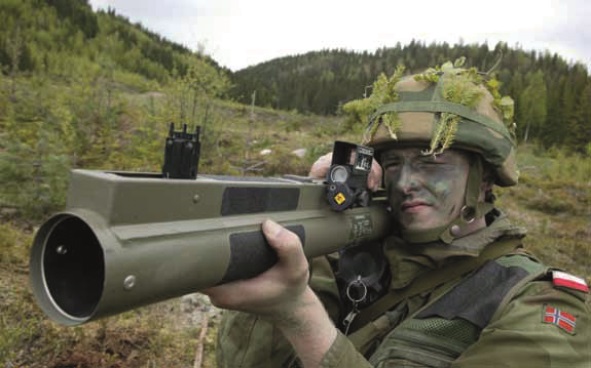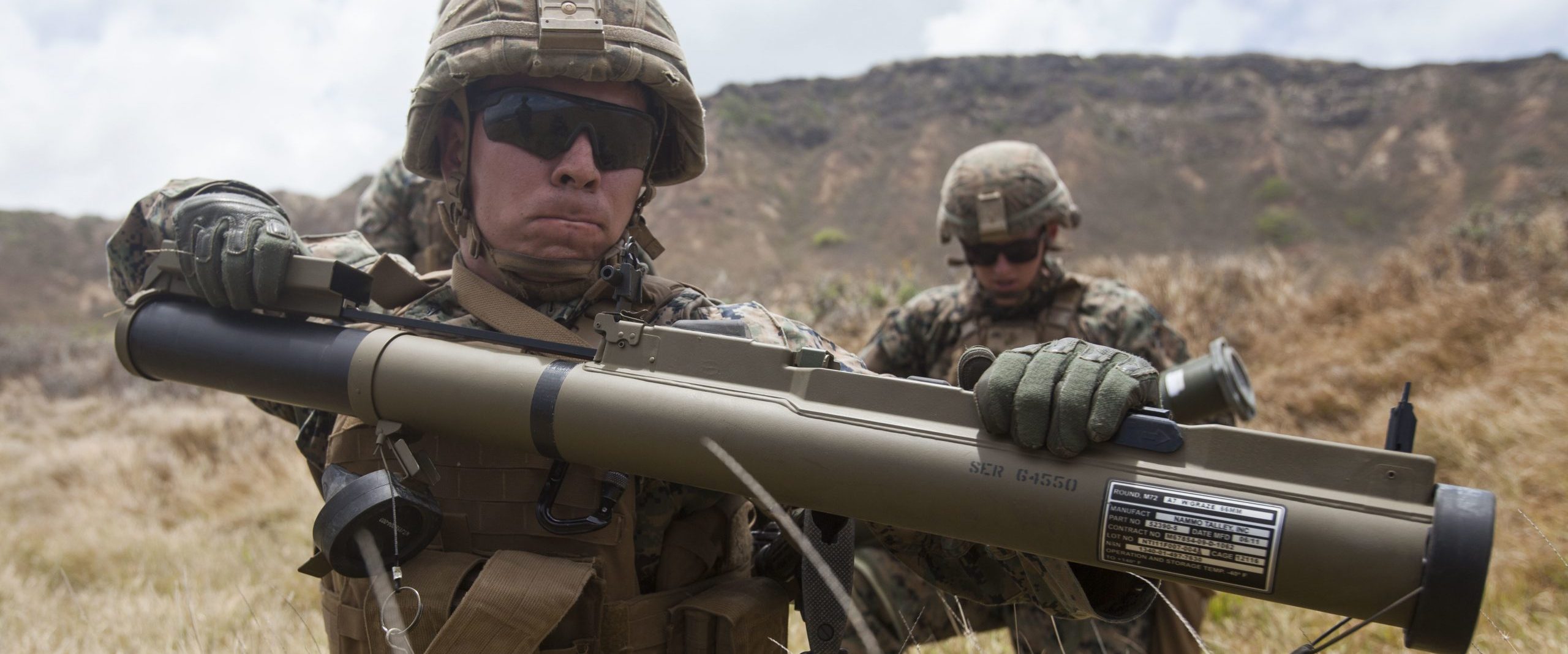
M72-series
Lightweight Assault Weapon
Weapons standing the test of time, and continuously proving too effective in battle to be retired to a museum display – like Nammo’s M72 Shoulder-Fired Series – are being successfully used on the modern battlefield.
Transitioning over time through several design iterations, the M72 weapon is locally manufactured in several countries, including Norway – which began licensed manufacture in 1966 for a local defense force requirement; and the United States.
“Nammo has more than 20 countries buying M72 variants today,” explained Quoc Bao Diep, Vice President of Shoulder-Fired Systems at Nammo. “This success is the result of several enhancements over the M72’s original 1960s design, including to the launcher, warheads and fuzes.”
Diep notes that soldier safety is a key driver for many improvements, including introduction of insensitive munitions (IM), as well as a two-step arming system for the fuze.
Nammo supported the recently completed U.S. qualification of a new M72 fire-from-enclosure (FFE) solution, ensuring troops are safe and avoid injury when the M72 is fired from rooms, bunkers or enclosures. This unique variant means that Soldiers and Marines do not have to reveal themselves to combatants when firing the weapon.
“The new FFE is a true Fire-from-an-Enclosure capability unlike anything the Marine Corps has ever seen,” said the Program Manager for Ammunition at Marine Corps Systems Command, in a news story published online in August 2020. “It will become a force multiplier.”
Nammo’s production of the FFE variants – known as the M72 Anti-Armor (A8) and M72 Anti-Structure Munition (A10) in U.S. military service – is to begin in 2021, with fielding expected in FY2022. This newest variant continues the heritage of a battlefield legend, meaning the M72 will be in service for many years to come.
The shoulder-fired system, recognizable today by name rather than by appearance when compared to early versions, traces its legacy to World War II, when allied and axis forces looked to neutralize tanks on the battlefield. The Germans pioneered the Panzerfaust while the U.S. deployed the M1 Bazooka, both able to fire a deadly high explosive anti-tank (HEAT) warhead capable of penetrating steel armor. Lessons learned from those early weapons resulted in the development of a lightweight, single-use, shoulder-fired weapon employed by an individual dismounted trooper to neutralize tanks and other targets.
As a lightweight rocket launcher developed in the 1960s, the M72 first saw combat during the Vietnam War. Designated as the M72, a 66 mm rocket launcher offers significant firepower in a small package weighing less than 4 kilograms (8.8 pounds), facilitating Soldiers or Marines being able to carry two, or even three, on patrol.
Acclaimed for its effectiveness and versatility, and continuously improved over the past six decades, M72 variants are currently in daily service around the world. With on going evolutionary development of planned system enhancements, including airburst technology, the M72 variants will continue to deliver revolutionary capabilities to the modern warfighter.
The rocket-aiming laser and accompanying SFL-100 IR-aiming Laser System Kit are designed to military standards for the Nammo M72 systems. The laser offers improved first shot accuracy of over 60 percent and is available in Infrared (IR) and Visible Red. The system kit is quick and easy to attach and detach, and is attachable to M72 without removing the sling.
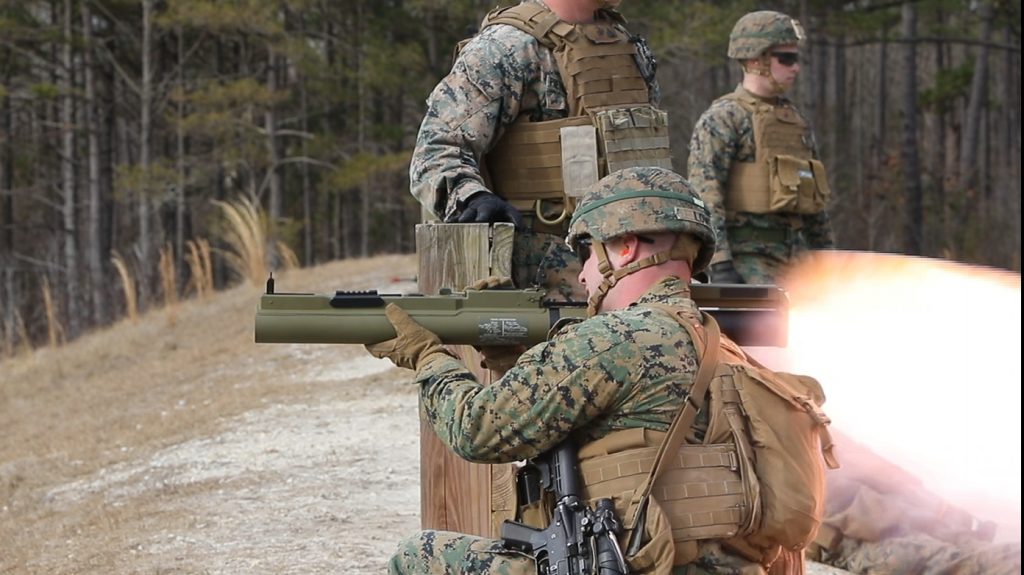
The Nammo M72 Anti-Structure Munition (A12) combines decades of innovation and Nammo expertise to deliver a world-leading close combat weapon. Disposable, easy to operate, and extremely lightweight and powerful, the M72 A12 provides significantly improved performance to the M72 A9 (Legacy ASM). The autonomous dual-mode fuze functions in fast (hard target) and delay (soft target) modes, while the optimized steel warhead body delivers increased fragmentation and ballistic performance. The M72 A12 is effective against brick, adobe, earthen fortifications, technical vehicles, 1/2 inch glass and exterior doors.

The Nammo M72 Anti-Structure Munition Reduced Caliber (ASM RC) combines decades of innovation and Nammo expertise to deliver a world-leading close combat weapon. The system is disposable, easy to operate, extremely lightweight and powerful. The M72 ASM RC variant is suitable for defeating brick, adobe, earthen fortifications and technical vehicles. The carbon fiber warhead gives low collateral damage. The dual safe fuze and on-axis trigger equip the warfighter with an improved weapon system that is both safe and effective.
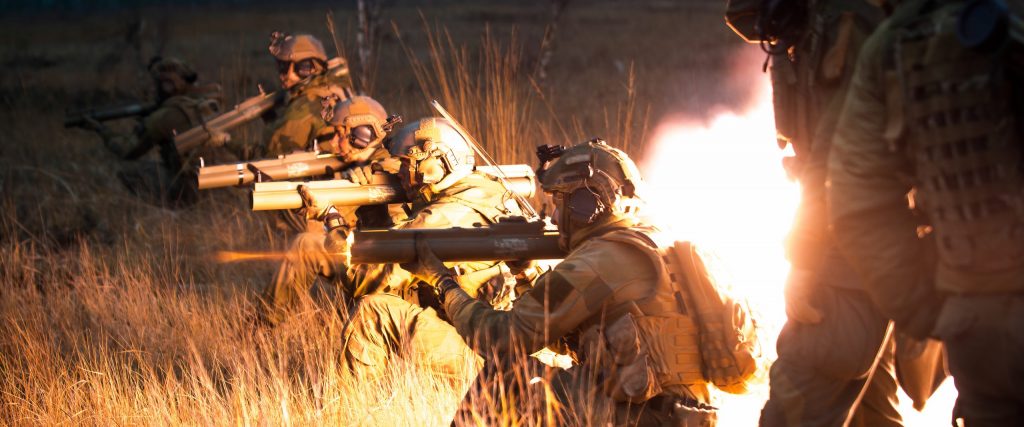
The Nammo M72 Enhanced Capacity (EC) combines decades of innovation and Nammo expertise to deliver a world-leading close combat weapon. The system is disposable, easy to operate, extremely lightweight and powerful. The M72 EC can penetrate up to 450 mm RHA. The dual safe fuze and on-axis trigger equip the warfighter with an improved weapon system that is both safe and effective.
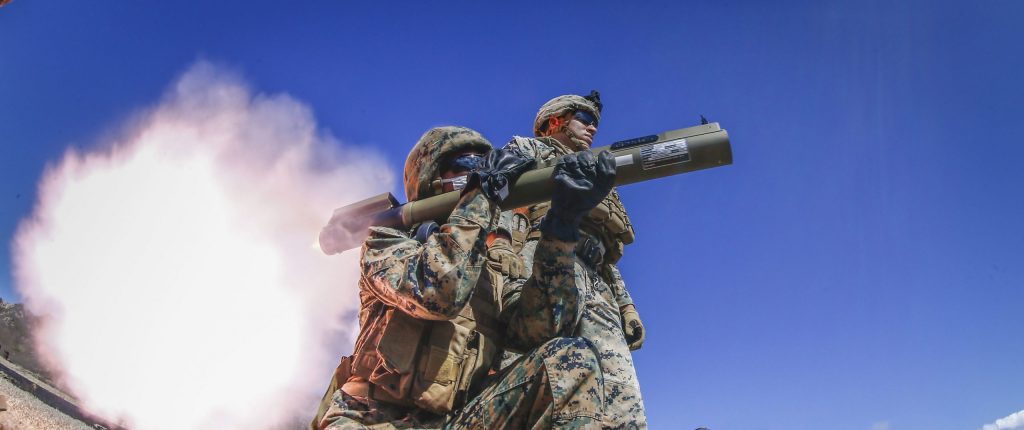
The Nammo M72 FFE combines decades of innovation and Nammo expertise to deliver a world-leading close combat weapon. Disposable, easy to operate, and extremely lightweight and powerful, it provides true fire-from-enclosure (FFE) capability, allowing warfighters to maintain cover and concealed positions. The anti-armor variant (M72 A8) is effective against technical vehicles, concrete walls and light armored personnel carriers, while the anti-structure variant (M72 A10) features an autonomous dual-mode fuze and can defeat brick, adobe, earthen fortifications and technical vehicles.

The M72 training system with the 21 mm subcaliber rocket gives a truly similar experience to the live round. The new on-axis trigger launcher may be adapted to use the 21 mm training rocket. The training system has the same weight as the combat system. This type of training is extremely cost-effective and safe for the user. The training launcher is reloadable multiple times.
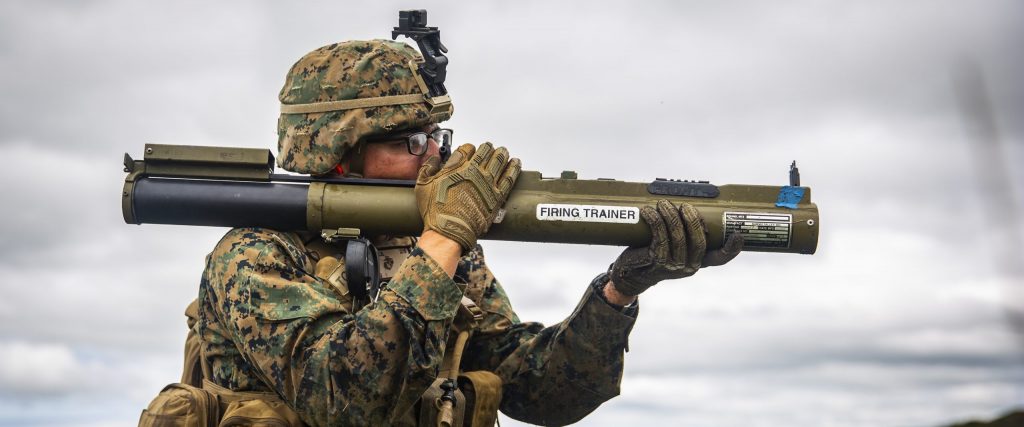
The newly developed reflex sight improves day and night operability. It can be used by both right- and left-handed operators, and with standard night vision goggles. Easy to operate, it has a ballistic reticle with a moving target aim point.