
Our Responsibility
At Nammo, we recognize that being a leader in aerospace and defense brings significant responsibility. We go beyond innovation by striving for ethical and sustainable practices. This means minimizing our environmental footprint, fostering a safe and thriving workplace, and upholding the highest standards of governance.
In short, we're committed to doing business the right way. We offer decent working conditions, invest in employee development, and responsibly prioritize business competitiveness. Sustainability is integrated into Nammo’s operations and is a managed, strategic pursuit that is reflected in our policies and processes.
Sustainability framework
Nammo has classified its material topics into five pillars under ESG (Environmental, Social, and Governance). Our sustainability framework was developed through feedback from stakeholders, internal surveys, and independent expert analysis. This framework helps us prioritize areas where we have a significant impact and those that are vital to creating long-term value, guided by our environmental, social, and ethical standards. Each pillar is aligned with relevant goals from the 17 goals set out in the UN Sustainable Development Goals (SDGs).

ENVIRONMENTAL STEWARDSHIP
We continuously strive to reduce our carbon footprint, from product development to the end of the production process, through industrial innovation, responsible consumption, and a strong focus on climate action. We are firmly committed to the ongoing development and implementation of initiatives that measurably reduce Nammo’s environmental footprint, such as aligning with the Paris Agreement international treaty on climate change by 2030.
Climate Risk
We have finalized a comprehensive climate risk assessment, aiming to protect our operations, our people, and the communities we support from the escalating impacts of climate change. Further, we have broadened our scope to include our supply chain, recognizing the critical role of our partners in our operational value chain. Our future ambitions extend beyond minimizing our ecological impact. We are striving to establish new benchmarks for sustainability and resilience in our sector.
GHG emissions
We are steadfast in our commitment to enhancing the precision of our greenhouse gas (GHG) monitoring, and our journey to comprehensively track and manage Scope 3 emissions is ambitious and ongoing. Nammo is poised to escalate our sustainability commitments going forward with an array of revised objectives, prominently featuring strategies to minimize our carbon footprint. This includes optimizing fuel efficiency, transitioning to greener energy sources, and scrutinizing emissions from both commuting and business travel. We will also intensify efforts to map and reduce indirect emissions linked to our transportation operations.
Energy consumption
At Nammo, our pledge to minimize energy consumption and enhance efficiency is unwavering. By employing our climate accounting tools, we monitor electricity usage across all sites and provide monthly reports. This data-driven approach enables us to identify and scrutinize any significant fluctuations, thereby pinpointing opportunities for improved energy management. Our proactive strategy to curtail energy use encompasses a dual focus: Addressing the rising demands of our customers through the expansion of facilities and an increase in production rate, as well as embedding energy conservation measures within our capital investment plans and strategic project reviews.
Water management
Water stewardship is integral to our operations. Nammo utilizes a monthly reporting system across our sites, the results of which are used in our climate accounting software. This digital oversight allows us to visualize the water footprint of each site, fostering a comprehensive understanding of consumption patterns. Through this lens, we identify variances in usage, discern their causative factors, and craft targeted strategies for conservation. We are poised to integrate water efficiency into our capital investment projects at Nammo, alongside our ongoing energy sustainability efforts.
Waste and hazardous material
Nammo’s waste management strategy is aligned with stringent environmental standards, ensuring compliance with local, national, and European regulations, including the REACH directive. To reinforce these stringent waste management protocols, comprehensive training is conducted across all sites, with the collection of annual waste stream information to prepare for sustainability reporting. In the ongoing sustainability journey, regulatory compliance remains a cornerstone of our operational ethos. The integration of Life Cycle Analysis (LCA) into both existing product portfolios and R&D projects is a testament to our proactive approach.
PRODUCT STEWARDSHIP
Life cycle management
At Nammo, we prioritize responsible product stewardship throughout the entire life cycle. This means ensuring efficient use of resources, minimizing waste, and eliminating “at-risk” materials from new developments.
LCA is becoming a cornerstone of our product development process. This comprehensive review allows us to assess the environmental impact of existing products and processes. By using LCA as a guide, we can select materials and partner with suppliers who share our commitment to a reduced environmental footprint. Ultimately, this paves the way for a more circular product life cycle, where resources are effectively recovered and reused.
By integrating life cycle thinking into our design philosophy from the very beginning, we ensure that environmental considerations go hand-in-hand with innovation. This approach allows us to deliver high-performance products while minimizing our environmental impact.
Product safety
We are committed to ensuring that the safety levels in our systems and products meet all relevant laws, regulations, international standards, and best practices. Nammo’s commitment to safety is deeply ingrained in our design philosophy. By actively listening to customer feedback and fostering a culture of excellence, we develop superior-quality products that not only fulfill but exceed customer expectations. This unwavering focus on safety reinforces our collective success.
EMPLOYEE SAFETY AND WELL-BEING
Occupational health and safety
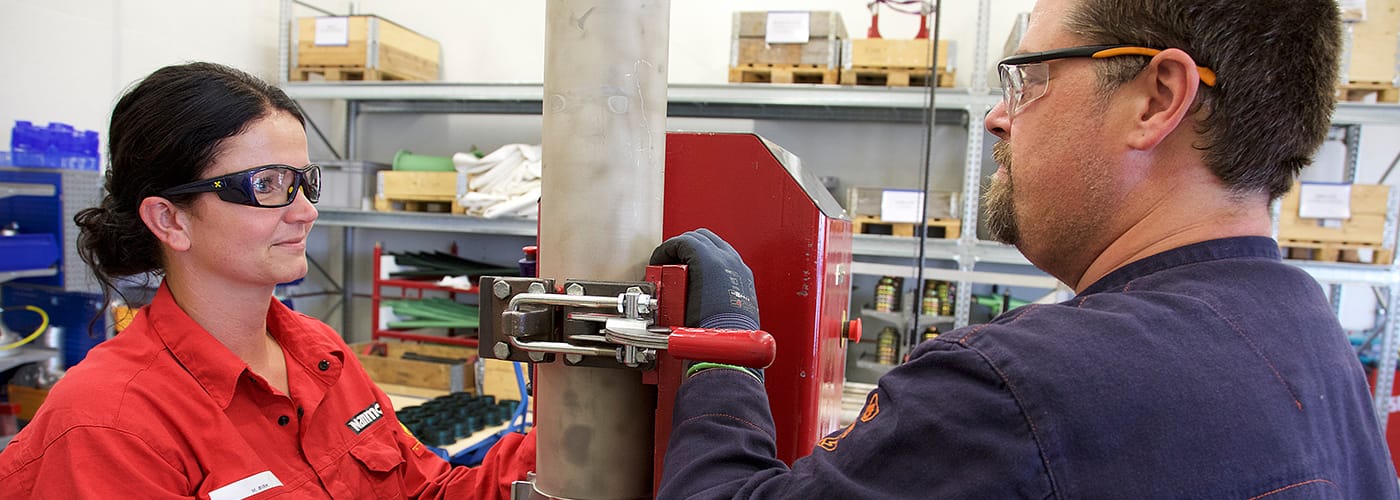
We are committed to ensuring that our employees are working in a safe and healthy environment, with the opportunity to develop their skills and build competence. Safety at Nammo goes beyond accident avoidance. Our goal is to embed a culture that cultivates psychological safety and empowers employees at all levels to raise concerns without fear of retaliation.
Nammo adheres strictly to employee screening safety protocols outlined in our Material Safety Data Sheets and complies with national regulations across all nine countries of operation. The psychosocial aspects of the working environment have also garnered increased focus, especially under the intensified production pressure due to global events.
Through many dedicated efforts, we reaffirm the commitment to not just maintaining but elevating the standards of occupational health and safety at Nammo, ensuring a resilient and secure future for all employees.
Diversity and gender equality
Nammo steadfastly cultivates a “One Nammo” culture, embodying unity while cherishing diversity. Our action-oriented approach commits us to year-on-year measurable improvements in gender balance.
Nammo offers equal employment opportunities to all employees and applicants, and no person shall be discriminated against for any reason. It is Nammo’s policy to recruit based on merit, regardless of characteristics such as gender, pregnancy, trade union membership, sexual orientation, race, ethnicity, nationality, disability, age, marital status, political affiliation, religion, or any other characteristic. Nammo’s employment policies are based on the principles of equality and diversity, with a belief that the elimination of unfair discrimination in the workplace contributes to productivity and performance as it allows people’s talents to be most effectively utilized.
After an increase of 2.7 percentage points from 2020, women accounted for 27.6 percent of all Nammo employees at the end of 2023. With a 2030 vision of a 30 percent female workforce, we have instituted KPIs across group entities to benchmark and fuel our progress.
To sharpen our focus on equality and to combat discrimination, we will implement a global employee engagement survey and integrate diversity and inclusion into our Global Leadership Development program.
Competence development
At Nammo, the strength of the Group lies in our employees’ expertise. To this end, “excellent competencies” have been earmarked as pivotal to the success of the Group. The performance management framework is meticulously designed to identify and cultivate the required proficiencies.
Nammo’s Human Capital Management system, particularly the Learning Management platform, serves our workforce’s educational needs in tandem with the Nammo Academy and leadership development programs.
The ambition is to further refine the Human Capital Management system, particularly focusing on the Learning Management and Onboarding modules. The goal is to seamlessly integrate and streamline training across global operations, governed by a unified policy framework.

BUSINESS INTEGRITY
Business partner due diligence
Nammo is committed to conducting business with efficiency, integrity, and the highest ethical standards.
Nammo’s “know your customer/know your supplier” policy is stringent. The Group engages in exhaustive due diligence before integrating business partners into the operations, holding them to an ethical benchmark and entering into agreements that minimize risk.
VALUE CHAIN INTEGRITY
We ensure decent working conditions internally and take responsibility for ensuring decent work and economic growth in our supply chain.
Going forward, Nammo will continue with its risk-based due diligence framework, enhanced screenings and controls to prevent sanction-related risks. The Group aims to certify that suppliers and business partners not only comply with our business and ethical standards but also actively contribute to minimizing sustainability risks and championing ESG values throughout our value chain.
Supply chain governance
Nammo operates a global and complex supply chain, involving a diverse array of partners, including raw material providers, component manufacturers, sub-contractors, and service providers across maintenance, transport, and consultancy sectors. Nammo’s network spans across Europe, North America, Central and South America, Asia, and South Africa, consisting of over 7,000 suppliers. All suppliers are required to adhere to the Supplier Conduct Principles, which demand compliance with legislation against modern slavery and human trafficking, environmental impact reduction, continuous environmental performance improvement, and the prevention and mitigation of environmental and health risks. The due diligence process of the suppliers is mandated by the Nammo Management System’s procurement and third-party risk management protocols, ensuring that each legal entity and business unit within Nammo is accountable for the integrity of its supply chain.
Nammo’s approach to human rights
Nammo is steadfast in its commitment to safeguarding human rights across all facets of its operations. This commitment is evidenced by a comprehensive mapping initiative undertaken to pinpoint the most pressing human rights challenges the company faces. The results of this initiative have revealed several areas of potential risk:
- Transactions in high-risk territories
- Supply chain oversight
- Diversity
- Logistics
- Corruption
In recognition of the relatively low risk of human rights violations within its legal entities, thanks to their geographic locations and the rigorous national regulations, Nammo remains vigilant. Our proactive engagement with the European Works Council (EWC) program serves as an additional safeguard. EWCs, as consultative bodies that represent employees across European multinationals, convene twice-yearly with Nammo’s management to deliberate on issues pertinent to maintaining equitable working conditions.
Anti-bribery and corruption
Nammo upholds high ethical standards by continuously training employees in the best ethical practices and conducting due diligence on customers and partners. Our success depends on our compliance with the Code of Conduct and all supporting policies, laws and regulations of all countries in which we operate, and with all applicable national and international codes. Nammo’s ethical roadmap, the Code of Conduct, outlines the principles guiding the actions and decisions of the employees and third-party representatives. The Code of Conduct represents the regulations and is integral to our corporate mindset.
Grievance mechanisms
Nammo is committed to maintaining open and transparent communication across all levels of its organization, both with its stakeholders and within the communities served. This is crucial for identifying and addressing any adverse impacts that the operations might inadvertently cause or contribute to.
All Nammo employees, customers and other business partners are expected to report any conduct they believe, in good faith, to be a violation of the Code of Conduct, any policy, or law. By speaking up and reporting compliance concerns, Nammo will receive the help it needs to review and act on any issue and protect our business and reputation.
If the concern cannot be resolved through communication and dialogue, we encourage the use of our confidential integrity line, Speak Up.
Find out more about reporting concerns
INTERNAL CONTROL, RISK AND COMPLIANCE
Nammo has established governance and internal control guidelines to mitigate risks and promote efficient and sustainable use of resources. Nammo’s internal control, compliance, and risk management system is grounded in its leadership culture, vision, and values, as well as its Code of Conduct, risk management, reporting, and control mechanisms.
The Nammo Management System
Nammo’s Group governance and management document outlines the Nammo Management System (NMS), which sets the standard for governance and internal control for the entire organization. The NMS shall support all Nammo legal entities to ensure compliance with relevant certification standards. Compliance with NMS ensures that Nammo adopts commercial best practices in its operational context in line with the demands and expectations of our stakeholders. NMS is based on relevant international certification standards (ISO 9001:2015, AS9100D) and is supported by statutory requirements, Nammo Board of Directors directives, and other guidelines for the Group to sustain its competitive strengths in key markets. Internal control mechanisms, including guiding principles, processes, and tasks, are performed by Nammo employees at all levels, ensuring quality reporting to both internal and external stakeholders, in accordance with legal and regulatory frameworks.
NMS undergoes continuous development which focuses particularly on the technical and digital user-friendliness of the system, as well as on ensuring compliance with relevant requirements.
Risk management
Risk management is crucial to Nammo’s success, and the company strives to identify, assess, and control risks that may impede Group objectives or harm our values, employees, brands, or reputation. A sound risk management process and culture improve strategic decision-making, reduce financial uncertainty, and protect our brands and our reputation, while empowering us to recognize the opportunities in uncertainty. During the annual strategy process, risks and opportunities related to Nammo’s business operations are identified, and operational risks and opportunities are addressed by the responsible corporate function, business unit, or legal entity as appropriate.
Compliance
Compliance is an integral part of Nammo’s management system directives, processes, procedures, and support tools. The Group has a robust compliance program covering areas such as ethics and anti-corruption, export control, and responsible business conduct. The Sustainability & Compliance department manages the compliance program in cooperation with the Legal & Regulatory Affairs. The established group of compliance champions with representatives from each Nammo legal entity meet regularly and assist in implementing and monitoring local compliance processes. The Sustainability & Compliance department regularly reports on the status of its work to various stakeholders, such as the Board of Directors, RACC and the Group Management Team.
Export control
Export control regulations prohibit the export and transfer of dual-use and defense-related products, technologies, and services without the approval of the relevant governmental authority. These regulations protect international security, uphold foreign policy interests and govern how Nammo conducts business.
Throughout Nammo, experts conduct due diligence on the value chain before seeking export authorizations. Nammo’s export strategy is rooted in the basic principles of Know your Customer, Know your Supplier, and Know your Third Parties, including End-Users in each business transaction.
As geopolitical shifts continue to influence governmental policies and reshape trade controls, Nammo stands prepared to respond with vigilance and adaptability.
Cybersecurity
The defense and aerospace industry plays a strategic role in geopolitics, and as a result, faces an increased threat of cyberattacks. Like most companies in the sector, Nammo is subject to a growing number of attempted cyberattacks related to sabotage, fraud, extortion and additional attempts to retrieve proprietary information. To protect its proprietary information, Nammo takes a holistic approach to threat management that includes personnel, physical, information and IT security controls. As cyber threats become more sophisticated, Nammo recognizes the need to remain agile and adaptable. Nammo will continue to monitor the threat landscape and proactively adjust its cybersecurity strategy and approach as necessary to ensure the security and integrity of its systems, data, and intellectual property.
CORPORATE GOVERNANCE
Nammo AS is a limited liability company established under Norwegian law, with a governance structure based on the Norwegian Companies Act. Nammo’s Board directs and guides the company in accordance with global and national statutory requirements applicable in the countries where Nammo operates.
Nammo is subject to reporting requirements for corporate governance in accordance with the Norwegian Accounting Act. As a 50 percent state-owned company, it is also expected that Nammo adheres to the main principles of The Norwegian Code of Practice for Corporate Governance. The Board of Directors evaluates and discusses corporate governance periodically and actively pursues good management principles for corporate governance.

